What peptides are, in plain language.
/01 What they are
A peptide is a short chain of amino acids. Proteins are the same chemistry, just longer. The convention is roughly: under fifty amino acids, it’s a peptide; longer, it’s a protein.
Peptides are everywhere in biology. Insulin is one. So is oxytocin. The body uses them as signals, short, specific messages that travel through tissue and bind to receptors built to recognise them.
/02 How they work
A peptide binds to a receptor on a cell. The binding triggers a response inside the cell. That’s it. The peptide is the message, the receptor reads it, the cell acts.
What makes peptides useful in research is selectivity. A peptide that fits one receptor doesn’t fit another. So studying a peptide is a way of probing one pathway at a time, without lighting up the rest of biology in the process.
/03 Why research uses them
For most of the twentieth century, peptides were hard to make. That changed in the 1960s when chemists worked out how to build them reliably, one amino acid at a time. The cost dropped and the field opened up.
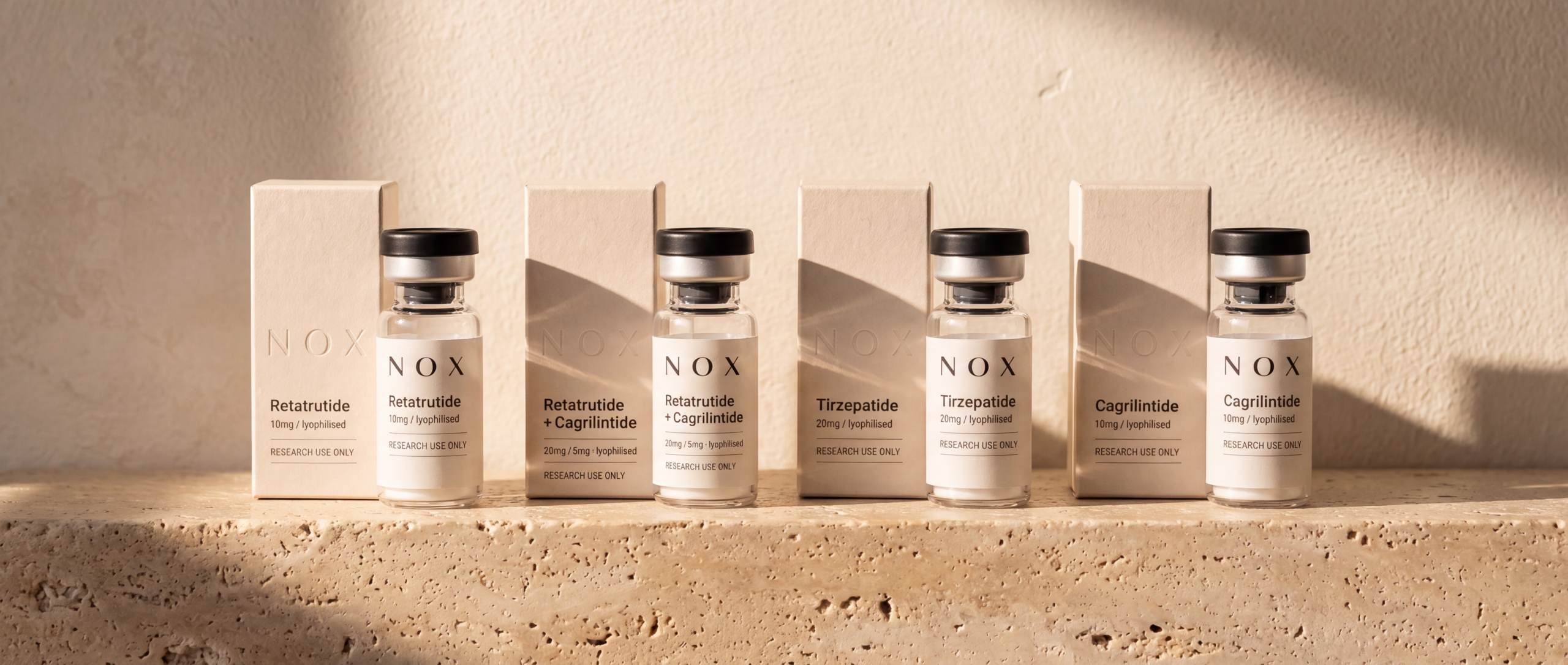
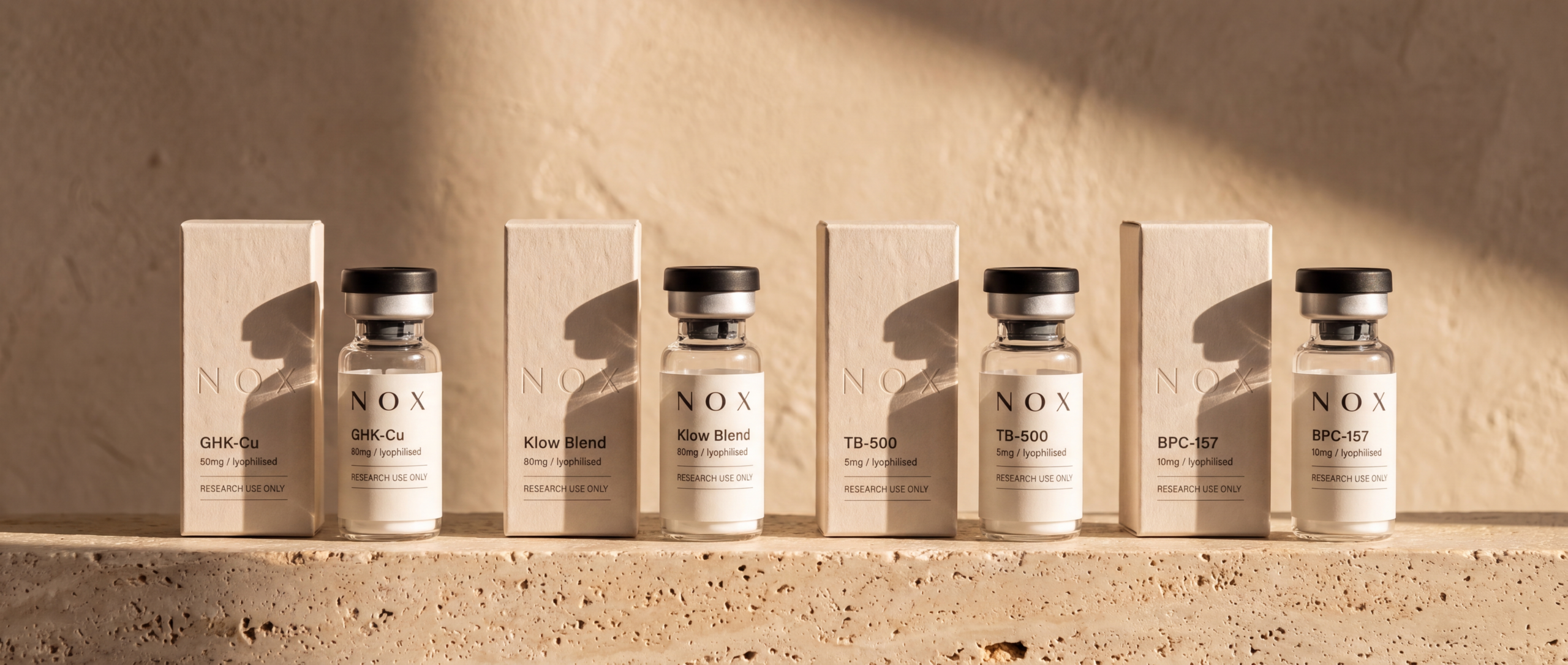
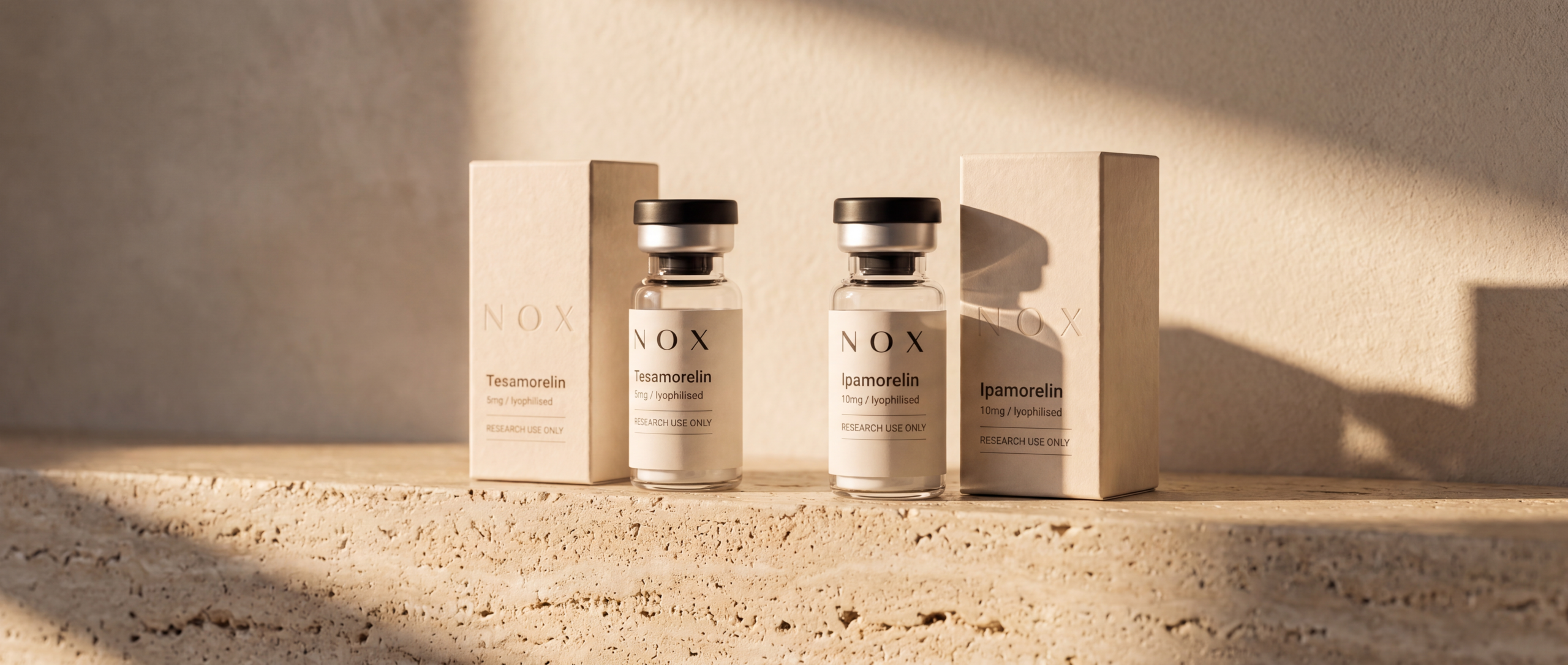
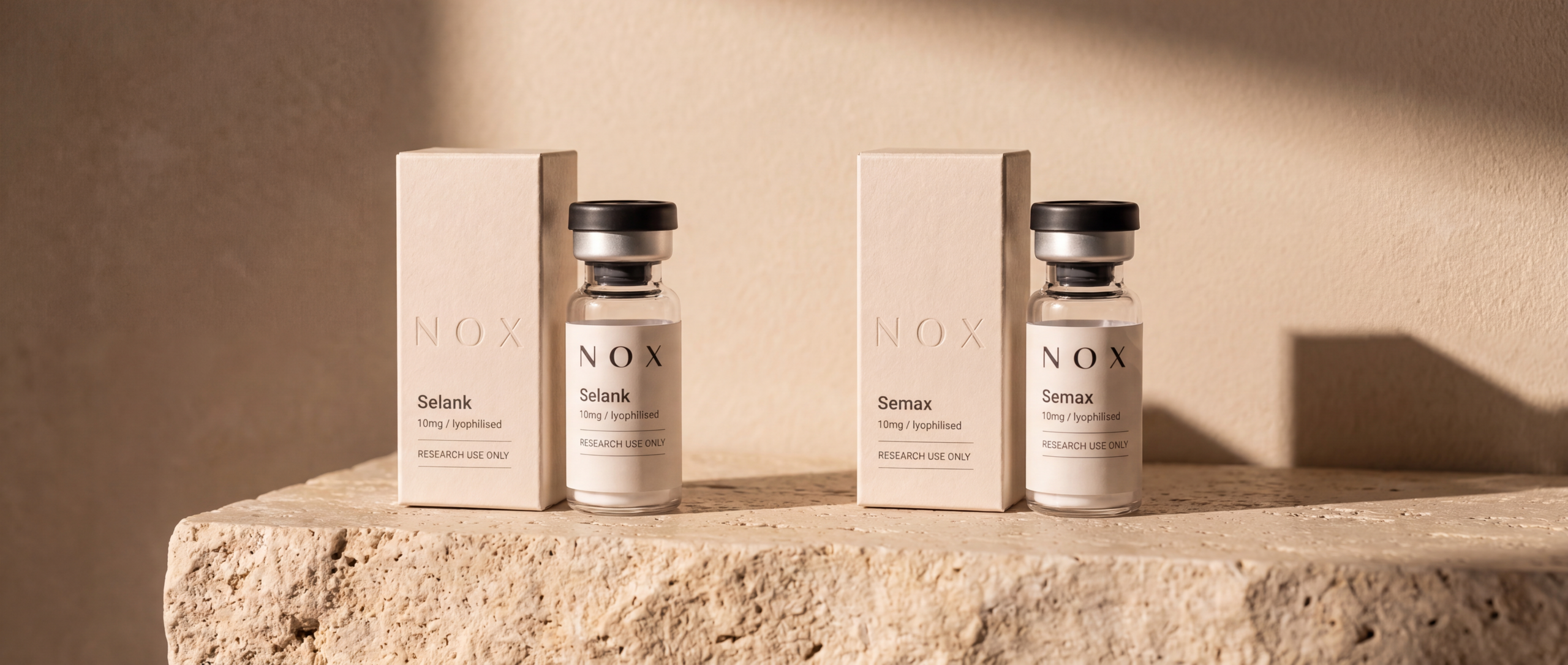
Since then, peptides have become one of the most active areas of biomedical research. Each compound has its own published literature, its own known affinities, its own known limits. The compounds in our catalogue are tools researchers use to ask questions about specific pathways.
/04 Reading a peptide name
Peptide names look impenetrable until you know the pattern.
BPC-157. The letters are an abbreviation from the lab that first isolated it (Body Protection Compound). The number is just a sequence ID. Tells you nothing about the molecule itself, it’s a research label.
GLP-1 agonist. GLP-1 is a peptide the body makes. An agonist is a synthetic version designed to hit the same receptor, usually longer-lasting. Semaglutide and tirzepatide are examples.
-tide, -relin, -mab. Suffixes mean things. -tide usually marks a synthetic peptide. -relin often indicates a releasing-hormone analogue. -mab is an antibody, not a peptide, and isn’t in this category.
/05 Why purity matters
Peptide synthesis isn’t perfect. Each step has a small chance of error. Over a chain of thirty or forty amino acids, those small chances add up. What ends up in the vial is mostly the peptide you ordered, and a measurable fraction of nearly-identical molecules that aren’t.
That’s what a purity number means. At 99%, the contaminants are at the edge of what good instrumentation can resolve. At 95%, they’re enough to muddy a careful experiment.
This is why sourcing matters, and why we keep the range deliberately short. How we select, label and store what we supply is on the Quality page.
/06 Where to read further
This page is a primer. For the science itself, the literature is the right place to look. PubMed is free, and searching the compound name returns the primary research.
Two readable starting points: Merrifield’s 1963 paper on solid-phase synthesis (the method that made modern peptide research possible), and Lau & Dunn’s 2018 review in Bioorganic & Medicinal Chemistry, which surveys the therapeutic-peptide field as it stands now.
For the practical side, reconstitution, storage, working out concentrations, the Reference page is where that lives.
This page is educational and is not medical advice, dosing guidance, or a recommendation for use of any compound in humans or animals. All compounds supplied by NOX are intended for in-vitro research and analytical reference. See our Research-Use-Only Agreement for the full position.