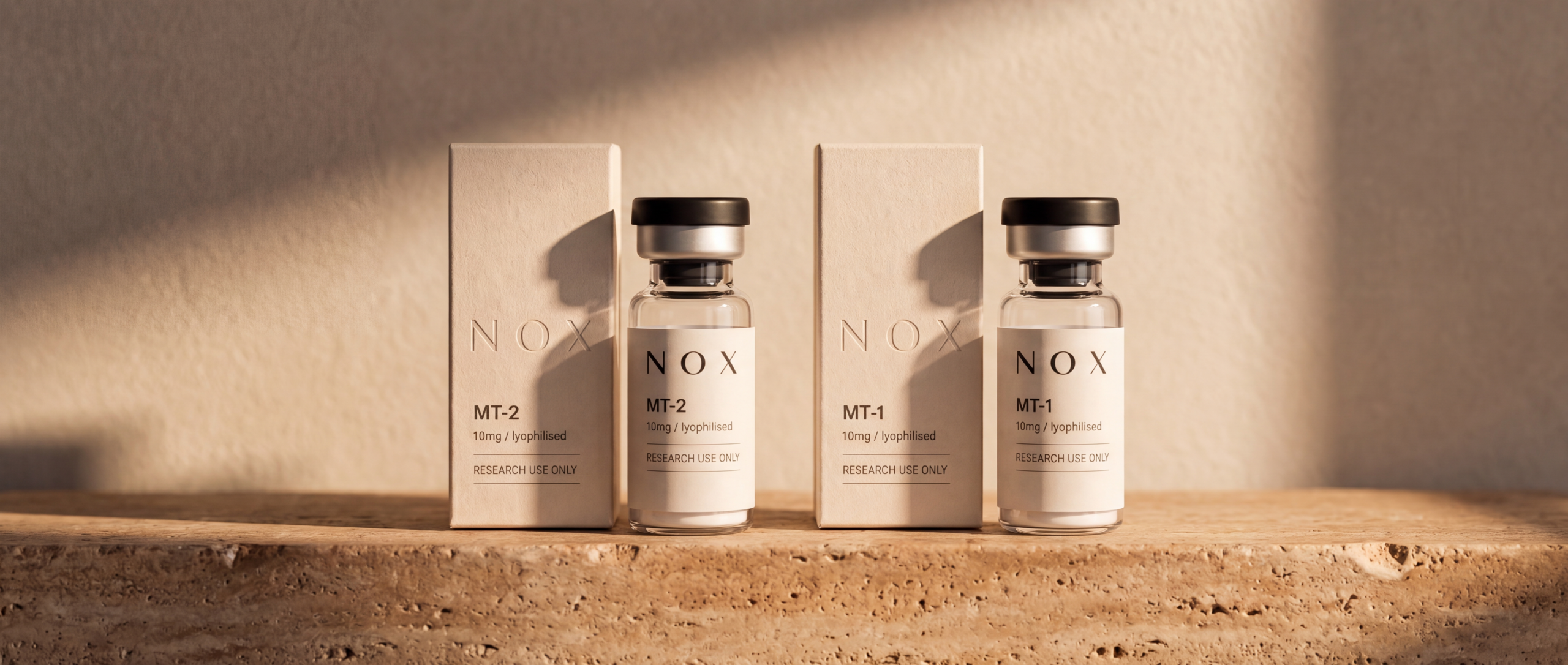
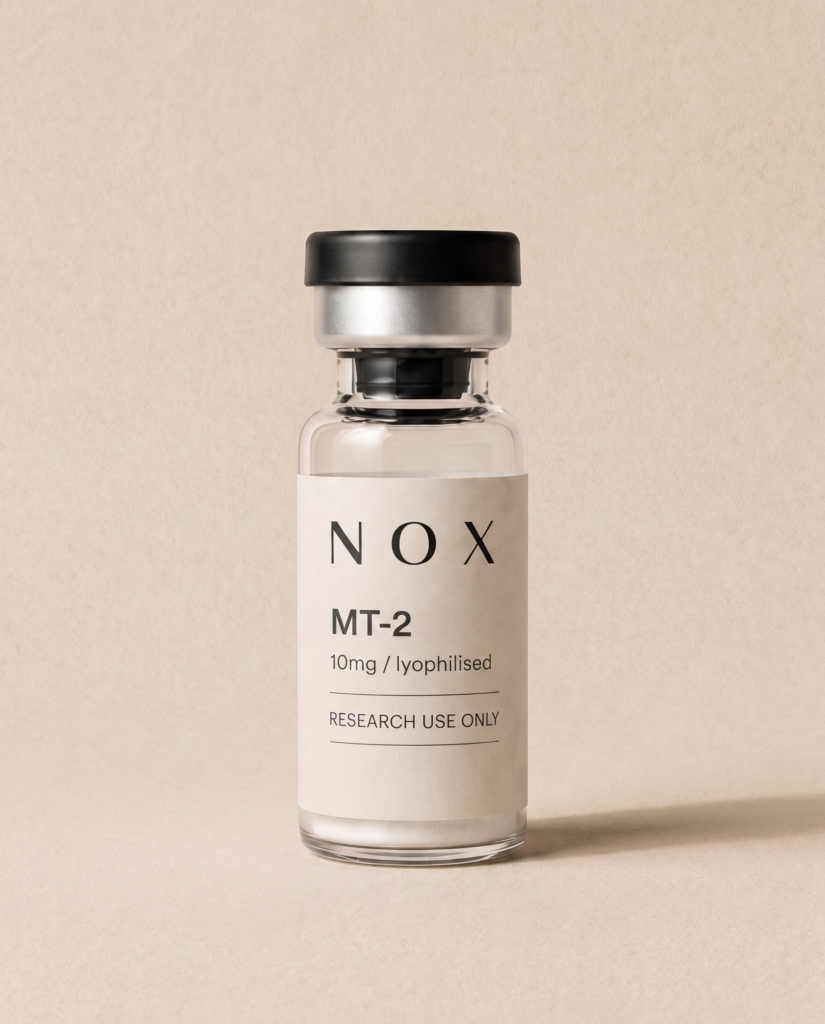
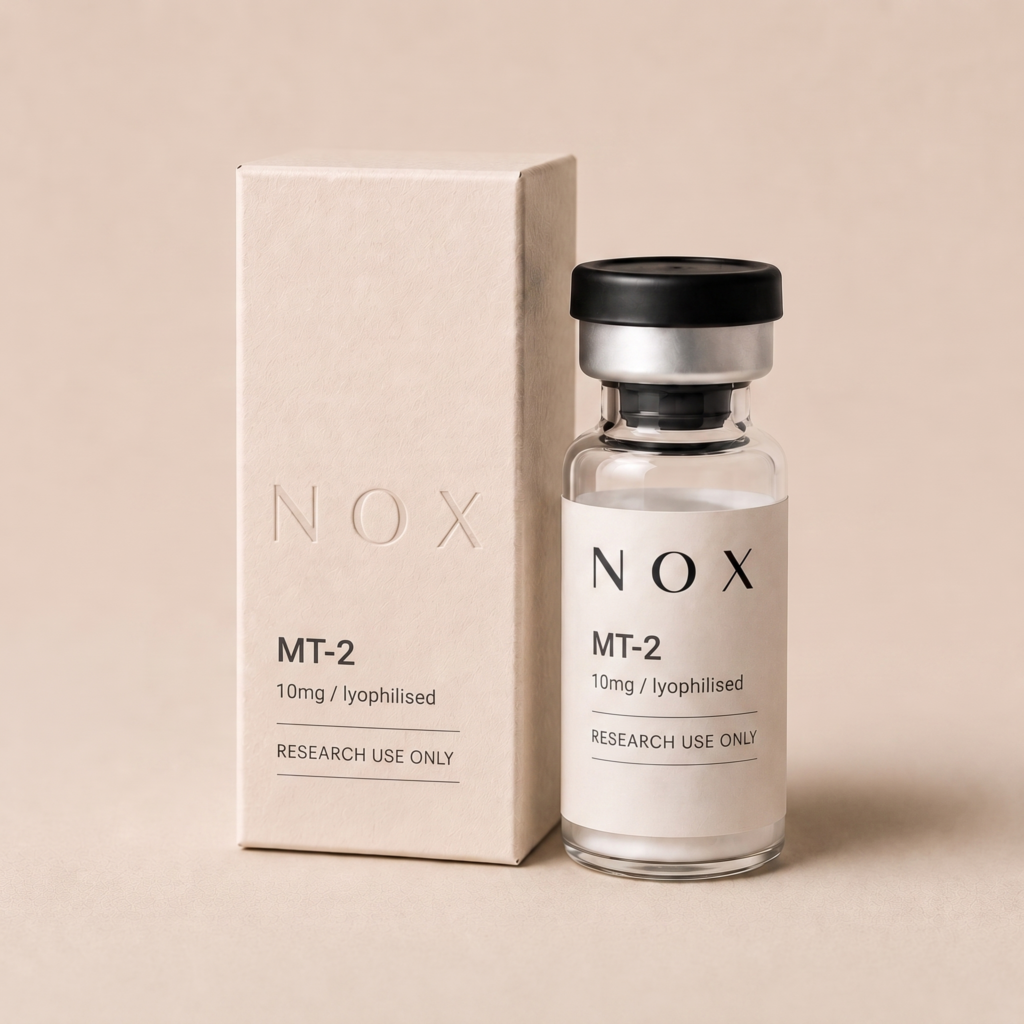
MT2
- Insulated thermal dispatch, Royal Mail Tracked 24
- Next-day UK dispatch on working days
- Supplied for in-vitro laboratory research
- Plain, unbranded packaging
Inside the vial.
A quick look at what this peptide is, where it comes from, and what it’s studied for.
α-MSH analogue
A synthetic version of alpha-melanocyte stimulating hormone, naturally produced in the pituitary.
7 amino acids
A short cyclic peptide sequence.
Pigmentation pathways
Investigated in research models.
- State
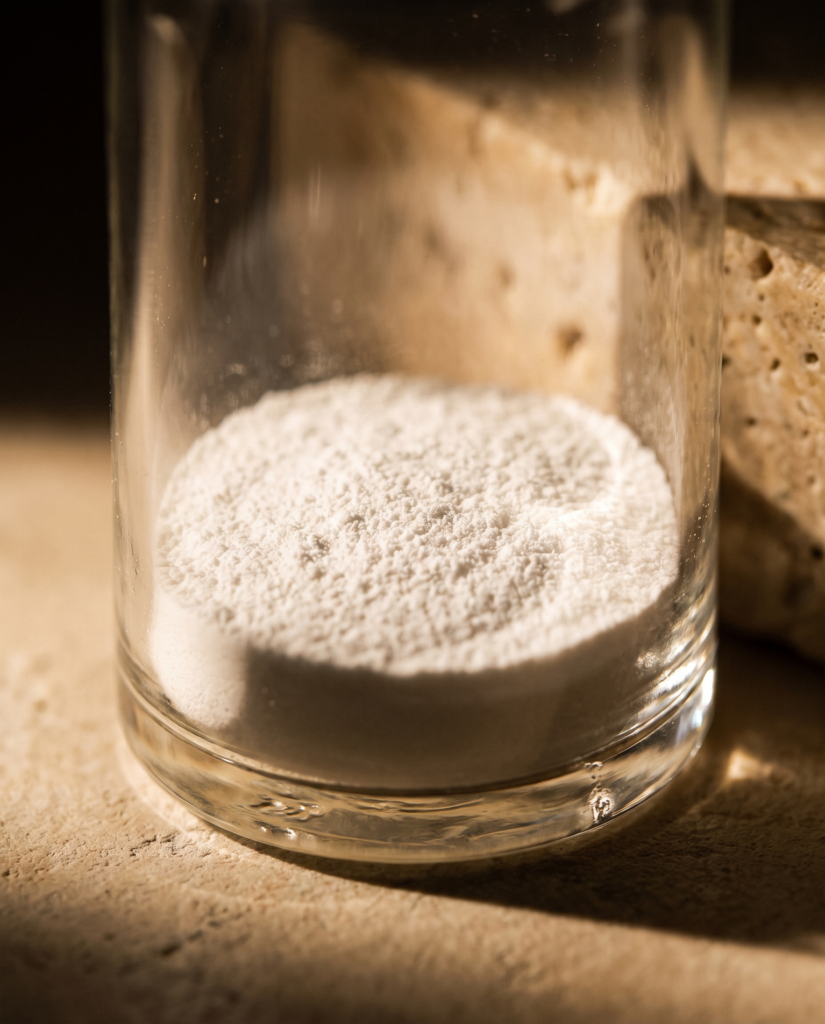
- White powder
- Sealed under
- Nitrogen
- Reconstitute with
- Bacteriostatic water
Lyophilised
Reference data & specifications.
Explore Similar Compounds
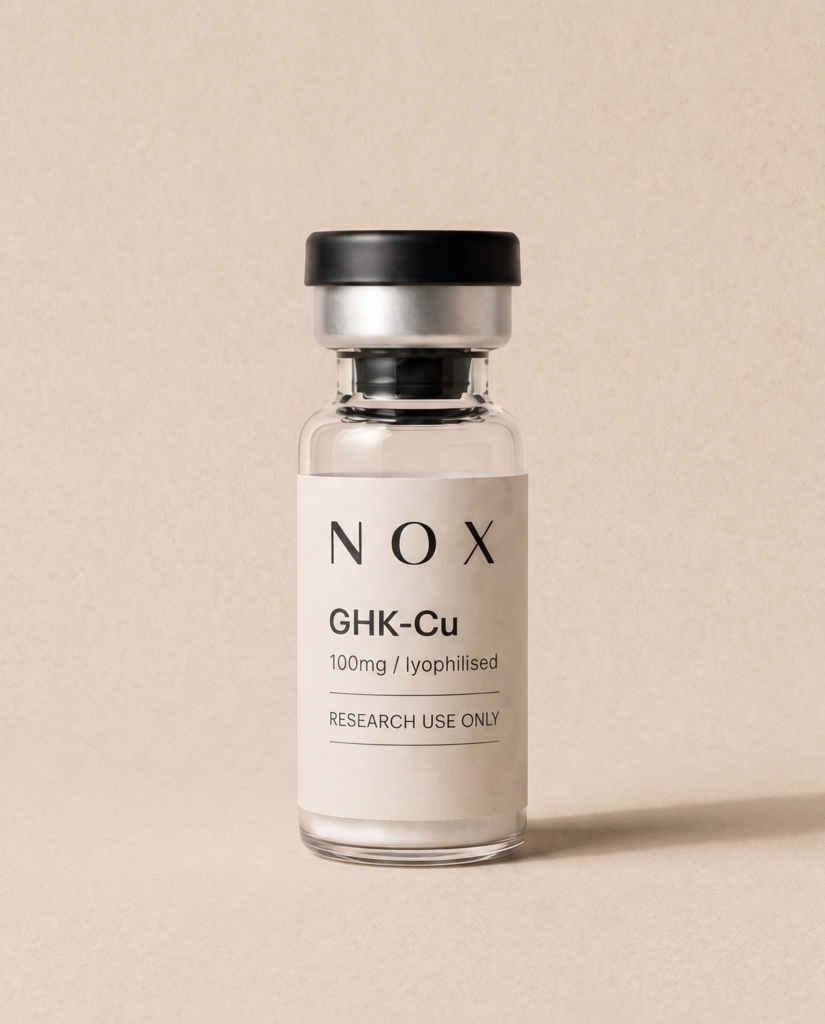
A curated selection of related compounds for further research.
Frequently Asked Questions
Answers specific to this research compound.
Melanotan II (MT2) is a synthetic cyclic heptapeptide analogue of alpha-melanocyte-stimulating hormone (alpha-MSH). A lactam bridge locks it into a ring, giving greater enzymatic stability than the linear natural hormone; it was originally developed in the 1980s as a tool to study the melanocortin system. NOX supplies MT2 lyophilised for research use only; nothing here is guidance for human or animal use, and no medical or cosmetic outcome is described or implied.
MT2 is characterised in the literature as a non-selective melanocortin agonist, it activates the MC1R, MC3R, MC4R and MC5R subtypes rather than a single receptor. MC1R is associated with melanogenesis while MC3R and MC4R are central-nervous-system targets, and this broad, non-selective profile is what defines MT2 in research. It is supplied by NOX as a research reference material for research use only and is not a medicinal product.
The two are studied separately because their structures and receptor profiles differ: MT2 is a cyclic peptide that acts non-selectively across the melanocortin receptors, whereas MT1 (afamelanotide) is a linear analogue that preferentially targets MC1R. NOX supplies both as lyophilised reference materials for research use only, and this is educational context rather than any use guidance.
Lyophilised MT2 is supplied as a sealed, freeze-dried powder and is generally kept frozen and away from light, typically stored at around -20°C for long-term stability, while for shorter periods it can be kept in the fridge at 2–8°C. Keeping the vial sealed limits moisture uptake and helps preserve the dry material. This describes general laboratory handling of lyophilised research compounds and is provided for research use only, not as guidance for any other use.
Bacteriostatic water is commonly used to reconstitute lyophilised research compounds because the small amount of benzyl alcohol it contains helps limit microbial growth in a multi-use vial. It simply dissolves the freeze-dried powder into a liquid so the material can be handled in the laboratory. Reconstitution is performed strictly within a research context; MT2 is supplied by NOX for research use only.
Once reconstituted, MT2 is in solution and generally less stable than the dry powder, so the liquid is typically kept in the fridge at 2–8°C and protected from light. Researchers usually prepare only what a study requires and record the reconstitution date. This reflects general laboratory handling of reconstituted research materials and is offered for research-use-only context, not as guidance for human or veterinary use.
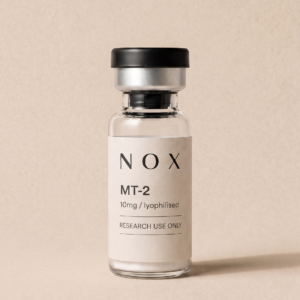
MT2 is supplied as a lyophilised powder in 10 mg. The stated strength is the mass of compound sealed in the vial before reconstitution; the working concentration depends on the volume of solvent a researcher adds during preparation. All presentations are research reference materials supplied for research use only.
Yes. MT2 is supplied by NOX strictly as a research reference material for laboratory and analytical use. It is not a medicinal product, food, cosmetic or veterinary product, and nothing in these answers should be read as guidance for human or animal use. All information here is provided for educational and research context only.